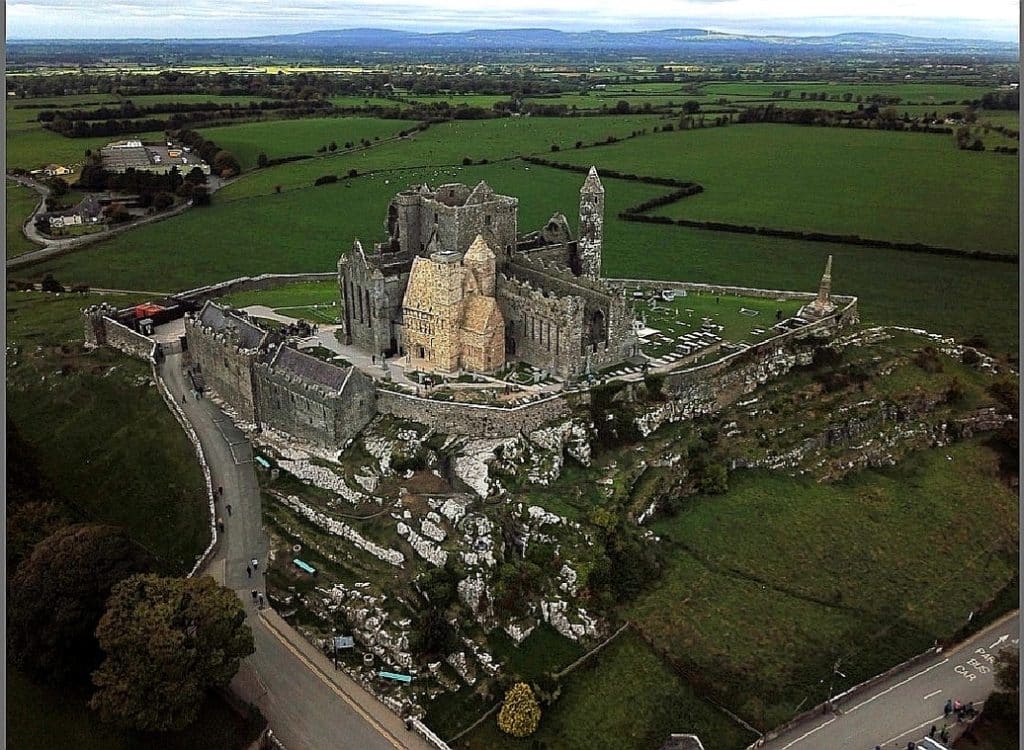
Rock of Cashel, County Tipperary
Rock of Cashel: Ireland’s Most Dramatic Historic Site (Complete Visitor Guide)
Perched high above the rich farmland of County Tipperary, the Rock of Cashel is one of Ireland’s most instantly recognizable landmarks. Rising from a limestone outcrop and visible for miles around, it feels less like a tourist attraction and more like a scene lifted from myth.
For many visitors, the Rock of Cashel becomes a highlight of their trip to Ireland – not just for its history, but for its sheer visual impact. This guide explains what the Rock of Cashel is, why it matters, what you’ll see when you visit, and how it fits perfectly into a well‑planned Ireland itinerary.
What Is the Rock of Cashel?
The Rock of Cashel is a fortified ecclesiastical complex that served as the seat of the kings of Munster long before it became a religious centre. According to legend, St Patrick himself converted the King of Munster here in the 5th century.
In 1101, the Rock was gifted to the Church, transforming it into one of the most important religious sites in medieval Ireland. Over the centuries, kings, bishops, and invaders all left their mark, resulting in a rare collection of medieval buildings gathered on a single dramatic hilltop.
Why the Rock of Cashel Is So Important
Few places in Ireland combine legend, politics, religion, and architecture as powerfully as the Rock of Cashel.
- It symbolised royal authority in Munster long before the Norman invasion
- It became a major centre of Church power in southern Ireland
- It contains some of the finest surviving medieval structures in the country
- It dominates the surrounding landscape in a way few historic sites can match
This combination makes the Rock of Cashel more than just a ruin – it’s a visual summary of Ireland’s early history.
What You’ll See at the Rock of Cashel
Despite being known as a single site, the Rock of Cashel is really a collection of remarkable buildings.
Cormac’s Chapel
Built in the 12th century, Cormac’s Chapel is one of the finest examples of Romanesque architecture in Ireland. Inside, faint traces of medieval frescoes still survive – extremely rare in Irish churches.
The Round Tower
Standing over 28 metres tall, the round tower predates most of the other buildings on the Rock. Like many Irish round towers, it served as a bell tower and place of refuge.
The Cathedral
The large Gothic cathedral dominates the summit. Though roofless today, its scale gives a powerful sense of the wealth and influence once held here.
The Hall of the Vicars Choral
This long building once housed the choir priests responsible for daily services. Today, it helps visitors imagine the Rock not as a ruin, but as a living religious community.
How Long Does a Visit Take?
Most visitors spend about 60–90 minutes exploring the Rock of Cashel. This allows time to:
- Walk the full site at a relaxed pace
- Take in the views across the Golden Vale
- Visit the interior buildings
- Listen to a guided explanation or audio guide
Because the site is compact, it fits comfortably into a full sightseeing day without feeling rushed.
Is the Rock of Cashel Worth Visiting?
Absolutely. Even travellers who are not especially interested in history tend to find the Rock of Cashel unforgettable.
It offers:
- One of the most dramatic photo opportunities in Ireland
- A clear, easy‑to‑understand story of Ireland’s medieval past
- A sense of scale and setting that museums simply can’t match
For first‑time visitors to Ireland, it often becomes a favourite stop.
The Rock of Cashel on a Guided Tour of Ireland
Visiting the Rock of Cashel independently is rewarding, but it becomes far more meaningful with expert context. On a small group guided tour, the site is woven into the broader story of Irish history – from ancient kings and saints to Norman invasions and religious change.
Rather than just seeing impressive ruins, you understand why this place mattered, who controlled it, and how it shaped the Ireland you see today.
This is exactly how the Rock of Cashel is experienced on our carefully planned 8‑day small group tour of Ireland, where travel distances, timing, and storytelling are all taken care of for you.
Practical Tips for Visiting the Rock of Cashel
- Wear sturdy footwear – the ground is uneven in places
- Bring layers; the hilltop can be windy
- Allow extra time for photography on clear days
- Combine it with nearby stops such as Hore Abbey or Cashel town
Final Thoughts
The Rock of Cashel is one of those rare places that lives up to its reputation. Whether you’re drawn by history, legend, architecture, or simply the view, it delivers a powerful sense of Ireland’s past in a single unforgettable setting.
For travellers seeking a deeper, richer experience of Ireland, it’s not just a stop along the way – it’s a highlight that brings the country’s story to life.
Why the Rock of Cashel Works Perfectly on a Small Group Tour
The Rock of Cashel is one of those iconic Irish sights that truly benefits from expert explanation and smart timing.
On a well-designed small group tour, you arrive at the Rock at the right point in the day, without worrying about parking, tickets, or navigating rural roads. More importantly, you experience it as part of a wider historical story rather than as an isolated stop.
When you’ve already learned about Ireland’s ancient kings, early Christianity, and Norman influence, the Rock of Cashel suddenly makes sense. The buildings, the setting, and the legends all connect.
This is why the Rock of Cashel is included on our 8-day small group guided tour of Ireland. It’s not rushed, it’s not tokenistic, and it fits naturally into the journey through Ireland’s south and west.
+353 87 936 0945 info@irishtours.ie
